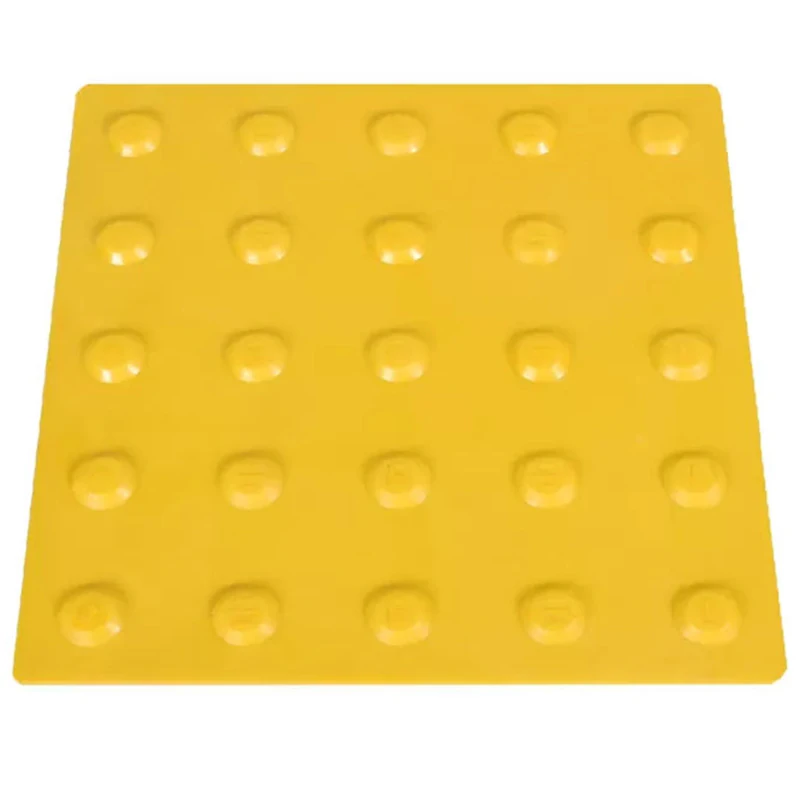
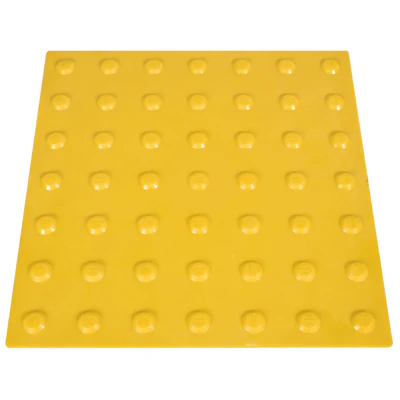
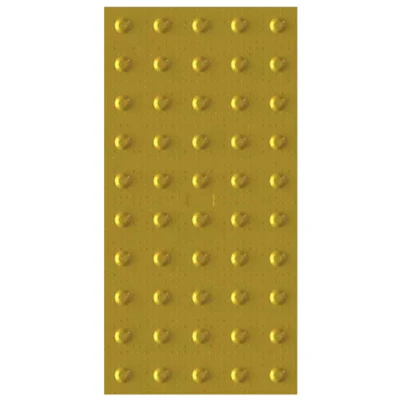
In modern spaces, accessibility is no longer a bonus – it is an obligation. Touch mark for visually odded people STOP 300x300 mm is designed precisely for this purpose: to provide a clear, safe and immediate signal to people with impaired vision when approaching a dangerous or stopping area.
From entrances to public buildings, to columns, escalators or interior intersections, this type of STOP tactile paving becomes a standard in smart and inclusive infrastructure.
Why the STOP 300x300 mm touch mark is essential
In the real world, safety doesn't just mean visual signaling. For blind or visually impaired persons, orientation is based on touch and sensory perception.
Role of the STOP tagging
- warns of a stopping area
- signal danger (trept, pin, roadway)
- helps to secure orientation in unknown spaces
- contributes to compliance with accessibility rules
This type of Tattoo plate with "buline" model (truncated domes) transmits a universal message: STOP – maximum attention.
Technical characteristics – designed for durability and performance
Optimum size for standard applications
- format: 300 x 300 mm
- thickness: optimised for resistance and easy integration
- effective coverage in risk areas
Professional material
The marking is made of industrial resistant materials:
- Polyurethane/hard PVC/stainless steel (depending on model)
- high resistance to heavy pedestrian traffic
- excellent behaviour outside and inside
Anti-skid surface
- Increased adhesion including wet grip
- increased safety in crowded public spaces
Strong Visual Contrast
- standard colours: yellow, white, grey or black
- High visibility for people with partial vision
Quick assembly
- Self-adhesive or with special adhesive
- installation on concrete, gravel, granite, metal
- minimum maintenance
Where the STOP touch mark is used
Typical applications in public spaces
- metro and train stations
- airports
- shopping malls
- public institutions
- hospitals and clinics
- Schools and universities
Critical areas where it is mandatory
- margin of the peron
- beginning and end of stairs
- Pedestrian crossings
- Main inputs/outputs
This type of tactile warning marking is essential for compliance with accessibility and safety rules.
How the STOP touch system works
Perception by cane or heel
The protuberance model (bulins) shall be immediately detected:
- by the white stick
- feeling under the skin
Universal interpretation
In international standards, this type of marking means:
➡️ Stop and evaluate the risk
Competitive advantages over alternatives
Upper strength
Compared to painted markings:
- does not delete
- does not require frequent replication
Efficient long-term cost
- single investment
- extended life span
Installation without major interruptions
- Quick mounting
- without complex works
Legislative compliance
It shall comply with the requirements concerning:
- accessibility of persons with disabilities
- safety in public spaces
Clear commercial benefits for the customer
- Increase user safety
- Reduce the risk of accidents
- Avoid legal sanctions
- Improve the image of the company
- Respecting European standards
- Demonstrate social responsibility
- Optimize long-term costs
How to choose the correct STOP tagging
Key factors:
- Type of surface (internal/external)
- level of pedestrian traffic
- the required assembly method
- environmental conditions (humidity, temperature)
Professional recommendation:
For intense and outdoor traffic → choose stainless steel or industrial polyurethane variants.
Correct installation – what you need to know
Essential steps:
- Cleaning of the surface
- Full degression
- Precise Positioning
- Uniform application
- Maximum grip pressure
The correct assembly ensures durability and optimal performance.
Maintenance and lifespan
- does not require special maintenance
- Standard periodic cleaning
- UV resistance and weather
- life-span: years of intensive use
Difference between STOP and directional markings
- STOP (bulins) → Warning, stop
- Directional (line) → track guide
Both are complementary in a complete tactical guidance system.
FAQ – Frequently Asked Questions
1. Is the STOP touch mark mandatory?
Yes, in many public spaces it is required by accessibility legislation.
2. Can it be mounted outside?
Yes, if the appropriate material (inox or UV resistant polyurethane) is chosen.
3. How long does it last?
Under normal conditions, it may take years without significant deterioration.
4. Can it be mounted on the wrong side?
Yes, with special adhesive or self-adhesive variant.
5. Is it anti-slip?
Yes, the surface is specially designed for high grip.
6. What color is recommended?
The yellow is the most used due to high contrast.
7. Can it be dismantled?
Yes, but it depends on the fixation method used.