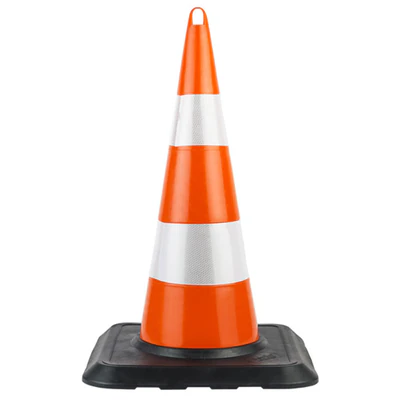
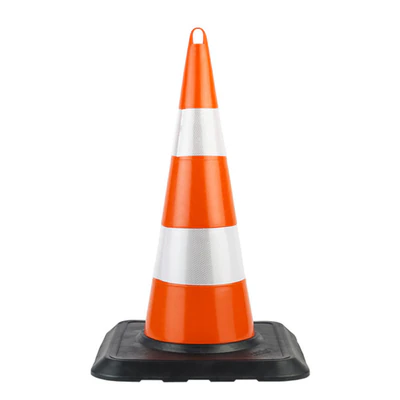
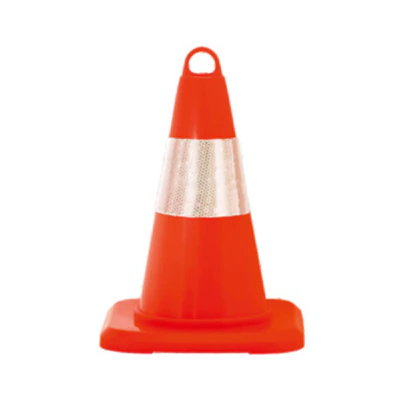
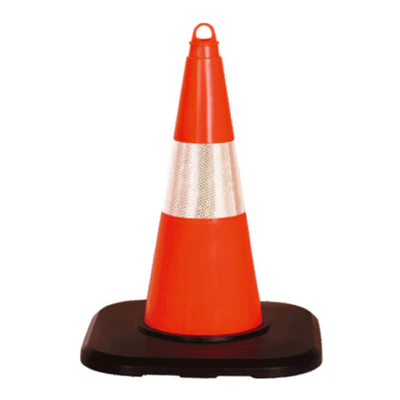
What Signaling and Steering Cones Are and Why They Are Essential
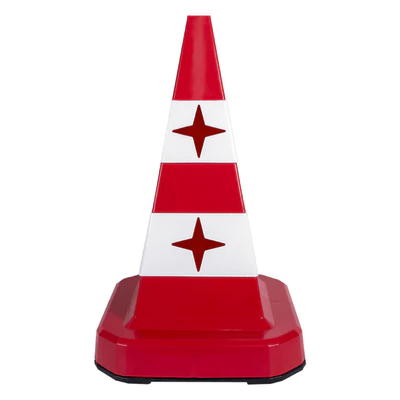
Signalling and steering cones are some of the simplest but efficient equipment used for the temporary organisation of traffic and the delimitation of work or access areas. We meet them every day – on public roads, in parks, in yards, in industrial spaces or during events.
Their role is clear:
attract attention, warn and guide in a visible and fast way.
Although they seem simple products, the wrong choice may lead to:
- insufficient visibility
- wind instability
- rapid deterioration
- increased risk of accident
A correct solution offers safety, clarity and effective organisation, whether we're talking about road work, temporary interventions or vehicle flow management.
Where these steering equipment is used
On public roads
- Temporary work
- Band restrictions
- Accidents or rapid interventions
- Temporary deviations
In this context, night visibility and stability are essential.
On construction sites
- Delimitation of hazardous areas
- Marking of excavations
- Separation of working areas from access areas
- Control of the flow of machinery
In parks and commercial spaces
- Temporary location of seats
- Organisation of movement in agglomerated periods
- Creating colors for controlled access
In industrial spaces and warehouses
- Separation of pedestrian areas from those for planters
- Marking of prohibited areas
- Indication of temporary hazards
Public events
- Organisation of access
- Evacuation color creation
- Steering of participants
How a traffic steering cone works
The principle is simple:
visibility + contrast + strategic positioning.
An efficient con has to meet three conditions:
- It should be observed quickly, even in low light conditions.
- Be stable on accidental contact or wind gusts.
- Transmit the restriction or redirection message clearly.
Essential elements
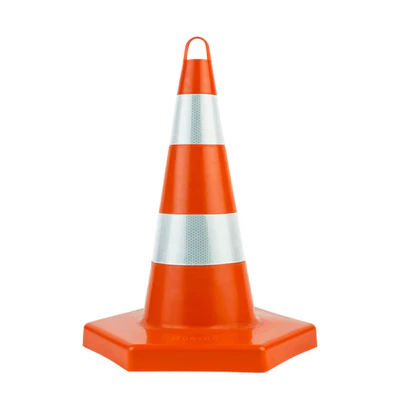
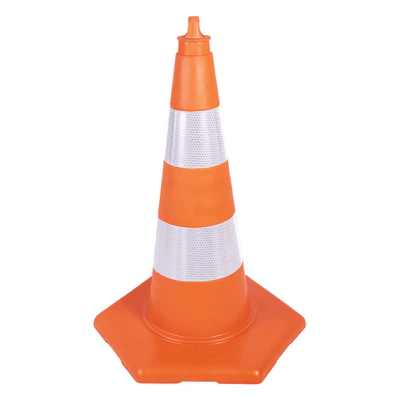
- Intense color (portocal or fluorescent red)
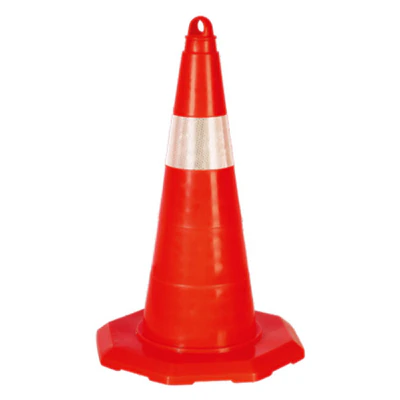
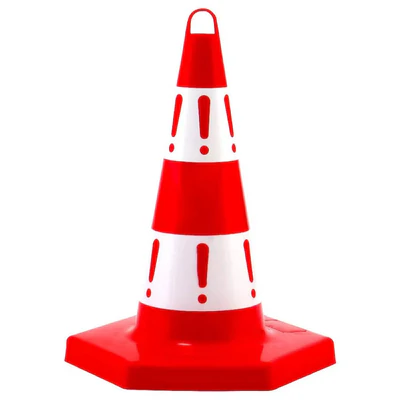
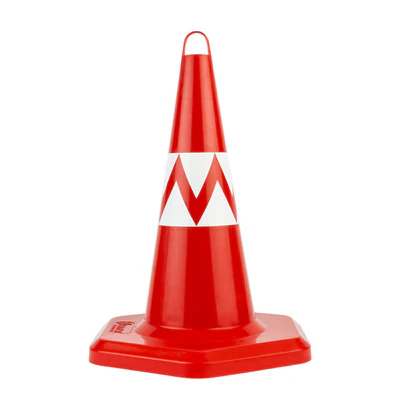
- Reflectorising band for night visibility
- Heavy base for stability
- Flexible, impact-resistant material
Why they are important for safety
A well-chosen signalling element may:
- prevent collisions
- reduces confusion in traffic
- protect workers
- guide vehicles safely
- limit access in hazardous areas
In the absence of a clear delineation, drivers react more slowly, and the risk of an incident increases.
Visibility and clarity are the key to accident prevention.
Types of signaling cones available
After height
Cones 30-40 cm
- use in parking spaces
- light temporary delineations
- low-traffic areas
50 cm cones
- mixed use
- Urban construction
- temporary interventions
Cones of 75–100 cm
- Road works
- intensive traffic
- national roads or motorways
The higher the speed of movement, the higher the height.
After weight and stability
Lightweight variants
- easy transport
- suitable for indoor use
Heavy-duty variants
- wind resistant
- Suitable for outdoor use
After material
- Flexible PVC
- Industrial rubber
- UV-resistant plastic material
Flexible materials are preferred because they return to the initial form after impact.
After the level of reflection
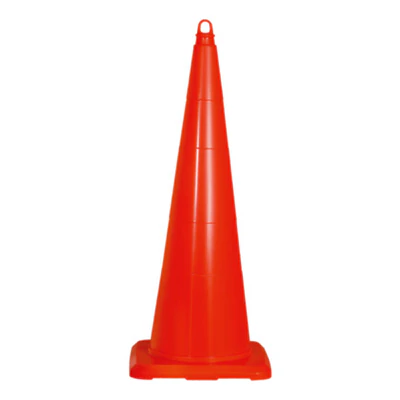
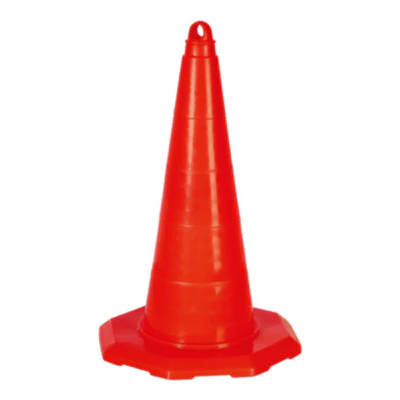
- no reflective tape (inner use)
- with a reflective tape
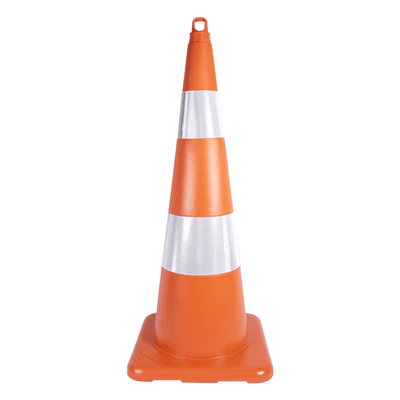
- with two reflective bands for intense traffic
Relevant differences between options
The choice should not be made solely on the basis of price.
Important factors:
- environment of use (interior vs. external)
- traffic intensity
- duration of use
- weather conditions
- the need for night view
A cheap model can be enough in a private parking lot, but completely unsuitable for roads.
How to choose the right driving cones
1. Where will they be used?
Exterior exposed to the wind? Choose heavy base.
Inside the warehouse? You can opt for the easy option.
2. What kind of traffic is there?
- intense car traffic → minimum height 75 cm
- pedestrian traffic → 50 cm is enough
3. Are they even used at night?
Choose models with certified reflective tape.
4. How long will they be located?
For long use, the material must be UV resistant.
Frequent errors in the choice and use of accounts
- Choosing a height too small for fast roads
- Lack of reflector elements
- Placement too rare
- Use on unstable areas without adequate basis
- Inadequate storage leading to deformation
Professional recommendations
From the experience of field use:
- For public roads, do not go below 75 cm.
- Choose a separate rubber base for enhanced stability.
- Do not mix different models in the same area – it creates visual confusion.
- In wind zones, double the safe distance.
Maintenance and good practice
Although they are resistant products, their lifespan depends on their use.
Recommendations:
- Regularly clean the reflective strips.
- It stores vertically.
- Avoid permanent exposure to the sun if UV is not treated.
- Check the integrity of the base.
Frequently asked questions
What height should a national road cone have?
Minimum 75 cm, double reflective tape.
Are the reflector elements mandatory?
For use on public roads, yes.
Can they be used inside?
Yeah, but there's enough of a model without reflection.
What material is the most durable?
PVC flexible industrial quality, UV resistant and impact.
Conclusion
Signaling and steering cones are not simple accessories, but essential safety and organisational tools. The correct choice depends on the environment, the level of traffic and the duration of exposure.
Investment in an appropriate product means:
- fewer incidents
- more clarity
- Real protection for people and equipment
- compliance with safety rules
A well-chosen solution makes the difference between chaos and control.