What it means to signal works and why it is essential
Reporting of work This is the set of measures and equipment used to warn, guide and protect traffic participants in areas where temporary intervention is taking place. Whether we are talking about road works, urban construction, network interventions or spot repairs, an area that is not properly signified quickly becomes a real danger.
It's not just a legal obligation. It is a fundamental measure of Road safety and labour protection.
Any work that affects the movement – auto or pedestal – must be clearly delimited, visible and coherent, so that drivers and pedestrians can quickly understand what is changing in their path.
Including a complete temporary signalling system
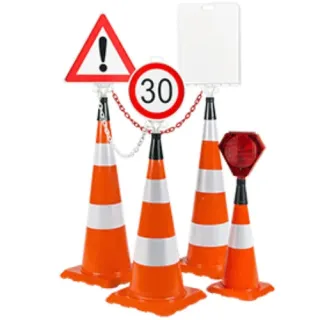
A properly configured system does not mean just a few random cones. Includes:
-
Road signs temporary
-
Warning panels
-
Directional beacons
-
Traffic cones
-
Flashing lights intermittent
-
Barriers and mobile fences
-
Reflective signaling
-
Temporary marking on roadway
Each element has a clear role in a unitary system of movement organisation.
Where to signal works
Road works
-
Asphalt repairs
-
Broilers and refurbishings
-
Work on underground infrastructure
-
Interventions at bridges and passages
Urban construction
Temporary assistance
The common question is:
"When is temporary signaling mandatory?
The answer is simple: whenever the normal flow of traffic is changed or there is a risk for traffic participants.
How a correct warning system works
An effective system is based on three fundamental principles:
1. Visibility
Equipment shall be:
2. Clarity
The message must be understood instantly.
There's no room for ambiguity.
3. Anticipating
Signalling shall be located at the right distance to allow for a safe reaction.
Why a proper organization of the work area is vital
Reduce Accidents
Most incidents in the construction sites occur due to lack of visibility or insufficient information.
Protect workers
Workers are directly exposed to traffic. A well thought out system creates a safety barrier.
Avoid sanctions
The authorities may apply consistent fines for non-compliant alerting.
Maintain traffic flow
A coherent organization reduces jamming and confusion.
Types of equipment for signalling work
Road signs temporary
-
Speed limitation
-
The narrow road
-
Occolire
-
Road to Work
These are made on mobile support, easy to locate and relocated.
Cones and beacons
Used for:
Large directional panels
Used in complex works, for temporary deviations.
Mobile barriers and protective fences
Lamps and lighting systems
Essential for visibility at night.
Important differences between solutions
Short-term works vs. extended construction sites
Rapid interventions require easy-to-install equipment.
Complex construction involves detailed organisation plans.
Urban versus national roads
High-speed roads require:
-
Advance warning panels
-
Larger warning distances
-
Extended visibility
Pedestrian traffic vs. car traffic
Pedestrian areas need clear boundaries and secure alternative access.
How to choose signaling equipment correctly
1. Analyze type of work
Is it a few hours intervention or a yard for months?
2. Assess traffic intensity
The volume of machinery shall influence the level of protection required.
3. Compliance with technical standards
The size of the indicators, the degree of reflectivity and the location distances shall be regulated.
4. Take into account the weather conditions
Wind, rain or snow may affect the stability of equipment.
Frequent errors in reporting work
-
Too late placement of indicators
-
Lack of continuity in signalling
-
Use of damaged equipment
-
Ignoring Night Visibility
-
Insufficient delineation of the risk area
These errors can lead to serious accidents and legal liability.
Professional recommendations
-
Develops a traffic organisation plan before the start of work
-
Use certified and compliant equipment
-
Checks daily the position and stability of the elements
-
Ensure additional lighting at night
-
Train staff on correct assembly
Experience shows that prevention costs infinitely less than the consequences of an accident.
Maintenance and good practice
-
Periodic cleaning of reflective surfaces
-
Replacement of deformed cones or beacons
-
Additional fixing under strong wind conditions
-
Adapting signalling as the yard evolves
Signaling is not static. It must be adjusted constantly.
Frequently asked questions
"What equipment is needed for road work?
It depends on complexity, but generally includes temporary indicators, cones, beacons and reflective panels.
"Who is responsible for signalling?
The contractor of the work or the entity carrying out the intervention.
"Is nighttime lighting mandatory?
Yes, in most cases where there is active traffic.
‘Can equipment be reused?
Yes, if they are in good condition and conform to standards.
Conclusion
Reporting of work is a critical element for road safety and worker protection. It is not an optional detail, but an essential component of any intervention on the infrastructure.
A chosen and implemented correct system offers visibility, clarity and protection, reducing the risks and ensuring that the work is carried out under optimal conditions.
When planned professionally and adapted to the real context, temporary alerting becomes an effective preventive mechanism, not just a formal obligation.