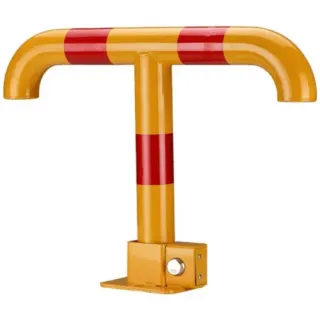
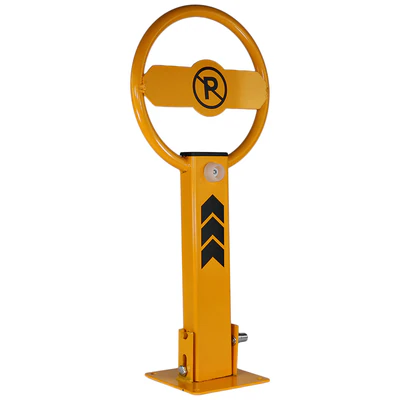
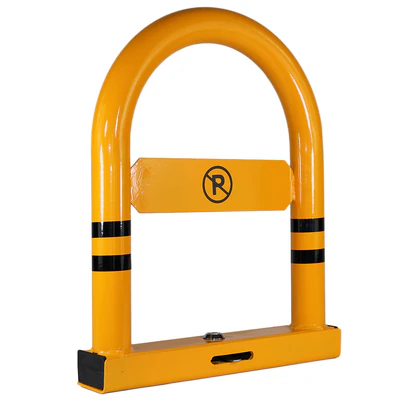
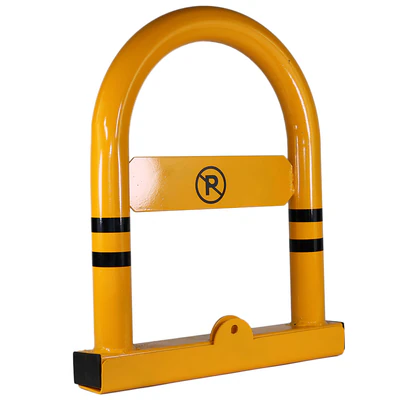
What is this category?
Category handheld devices includes all equipment operated by direct user intervention, without automation or complex power supply. He allows control, action, adjustment or blocking mechanisms, systems or equipment.
In short, they are simple, robust and reliable solutions for situations where:
- control must be direct and precise
- safety depends on human intervention
- no automation required
- Wants to reduce maintenance costs
From handles and mechanical buttons to lever-locking or lever-action systems, these solutions are present in almost any technical field.
Where the handheld devices are used
These equipments are used in an extremely wide range of applications.
In industry
- Production lines
- Mechanical machinery
- Safety systems
- Auxiliary orders for electrical equipment
In many situations, manual control remains essential even in automated systems, such as backup or emergency intervention.
In the construction sector
- Temporary mechanical actions
- Fixing and adjustment systems
- Lifting or tensioning equipment
In workshops and services
- Fine rules
- Mechanical locks
- Local orders of operation
In residential or commercial applications
- Closing systems
- Positioning rules
- Mechanical control mechanism
How it works, on everyone's understanding
The principle is simple: the energy applied by the user is transmitted directly to the controlled mechanism.
Example:
- Press a button → activate a mechanism
- Pull a handle → change the position of a system
- Rotate an item → set a parameter
Back there may be:
- lever systems
- arc mechanisms
- locking systems
- mechanical transmissions
The main advantage is immediate control and lack of dependence on a complex power supply.
Why these solutions are important
Even in a world dominated by automation, manual solutions remain essential for several reasons:
1. Increased safety
In emergency situations, manual control is the fastest and safest.
2. Reliability
Without sensitive electronic circuits, the risk of failure is reduced.
3. Reduced costs
Initial investment and maintenance are more accessible.
4. Direct control
The operator mechanically senses the system's reaction.
Real benefits for the user
- High durability in difficult conditions
- Dust resistance, vibrations and varying temperatures
- Intuitive operation
- Simple installation
- Independence from electricity supply
For many applications, they are the logical and efficient choice.
Types of handheld devices
Control devices
Mechanical buttons
Used for activation or stopping. They may be:
- momentary
- with return
- with lock
Handheld switches
Allows the change of position between two or more states.
Handles and levers
Used for the transmission of force or the change of mechanical position.
Adjusting devices
Rotating element
Allow fine adjustments.
Adjusting screws
Provides gradual and precise control.
Handwheels
Used for positioning and mechanical adjustment.
Locking and safety devices
Latches and closure systems
Ensures position fixation.
Arc-locking mechanisms
Allow temporary or permanent fixation.
Anti-return devices
Prevents accidental reverse motion.
Relevant differences between options
When choosing a manual solution, you must take into account:
1. Type of action
- pressing
- draw
- Rotation
- rotation
2. Force required
Some applications require great force, other fines.
3. Working environment
- temperature
- humidity
- exposure of chemicals
4. Frequency of use
A mechanism used daily must be much more robust than one used occasionally.
How to choose right – practical guide
Step 1: Clearly define the application
Ask yourself:
- What do I need to control?
- What force is involved?
- How often will it be used?
Step 2: Analyze the environment
For heavy industrial environments, you need materials resistant to:
- Corrosion
- powder
- vibrations
Step 3: Checks mechanical compatibility
Dimensions, mounting system, compatibility with the existing mechanism.
Step 4: Think Long-Term
Choose variants that:
- allow easy maintenance
- have spare parts available
- are standardised
Frequent mistakes and how to avoid them
Choice solely on the basis of price
A small initial cost can mean frequent replacement.
Ignoring the working environment
An improper mechanism can quickly collapse.
Subsizing
If the force applied is greater than the force allowed, the lifespan decreases dramatically.
Lack of initial testing
It is recommended to test before full integration.
Professional recommendations
From practical experience:
- Choose metal materials for applications with large loads.
- For frequent use, check the guaranteed life cycles.
- In aggressive environments, they opt for anti-corrosive protection.
- Don't ignore ergonomics — an uncomfortable mechanism will be used wrong.
Maintenance and good practice
Periodic checks
- visual control of wear
- verification of fixation
- test of operation
Lubrication (where applicable)
Reduces friction and prolongs life.
Cleaning
Dust and deposition affect mechanisms over time.
Preventive replacement
For critical applications, it is safer to replace before default.
Frequently Asked Questions (Real Formulations)
What is the difference between a manual system and an automatic system?
Manual control involves direct intervention and provides immediate reaction without dependence on power supply.
Are they suitable for intensive use?
Yes, if they are correctly sized for load and frequency.
Can they be integrated into automated systems?
Absolutely — they are frequently used as safety or backup elements.
Conclusion
Manual devices remain a key solution for control, safety and reliability in many areas. The right choice involves technical analysis, application understanding and sustainability orientation, not just initial cost.
When selected and used correctly, these solutions offer:
- precise control
- resistance in time
- operational safety
- Mechanical efficiency
A well-made investment in this category means stability, performance and operation without long-term surprises.