How to choose cable protections
The products in this category cover dimensions between 50 mm and 75 mm. Check the size, material and compatibility with your application in each product file.
In addition, for orders and questions, the Blockator.ro team offers delivery throughout the country and technical advice.
What Cable Protections Are
Cable protection are elements designed to protect electrical, data or telecommunications cables mechanical damage, humidity, dust or accidental exposure. They also allow for an efficient organization of cables, avoiding confusion and accidents.
They are made of resistant materials, such as PVC, polyurethane, rubber or composite materials, and come in flexible or rigid variants, as needed.
Their main role is to extending cable life, reducing the risk of short-circuit or physical damage and providing an orderly appearance to technical or office spaces.
Where cable protection is used
In houses
- Protection of cables from sockets and household appliances
- prevention of slippage or preventability
- organisation of office, PC and entertainment cables
In offices and commercial spaces
- protection of electricity and data networks
- hiding cables under offices or floors
- reducing the risk of accidents to employees or customers
In industry and logistics
- protection of cables crossing areas with intense traffic
- preventing deterioration of machinery or vehicles
- resistance to chemicals or extreme temperatures
In outer spaces
- UV protection and weather
- protection for lighting or telecommunications cables
- prevention of mechanical damage and exposure to water
How it works
Cable protections create a physical barriers between cable and external environment.
- Flexible tubes allow Introduction of cables and their easy rearrangement, absorbs impacts and light pressures.
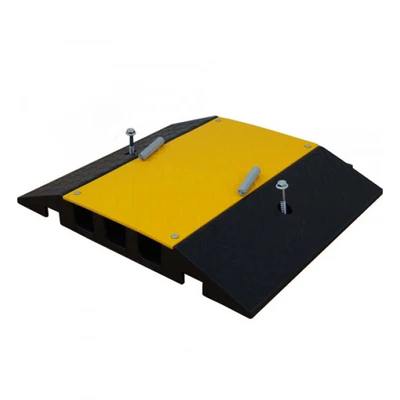
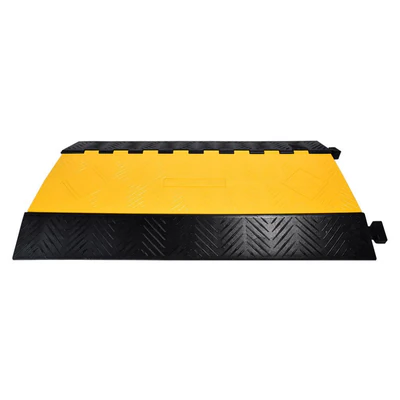
- Fixed rigid channels offer increased protection against shocks and intense traffic.
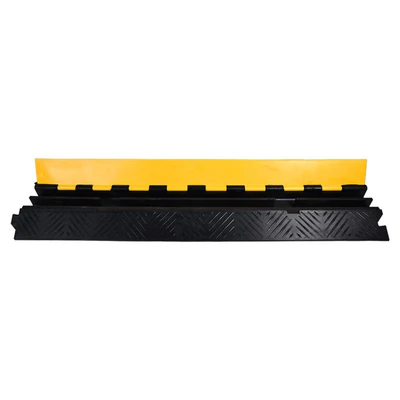
- Models with detachable lid allow the addition or replacement of cables without complete disassembly.
Why They Are Important
The use of cable protections brings real benefits:
- Increased safety – avoidance of accidental contact with electrical wires
- Prevention of damage – protects against cutting, abrasion and moisture
- Organisation and aesthetics – neater, cleaner spaces
- Reduction of maintenance time – cables are easily accessible and identifiable
Existing types and variants
After material
- PVC – rigid, moisture resistant and light wear
- Polyurethane – flexible, durable, impact-resistant
- Rubber – elastic, temporary protection, impact absorption
After form and assembly
- Flexible tubing – for curved, easy to install routes
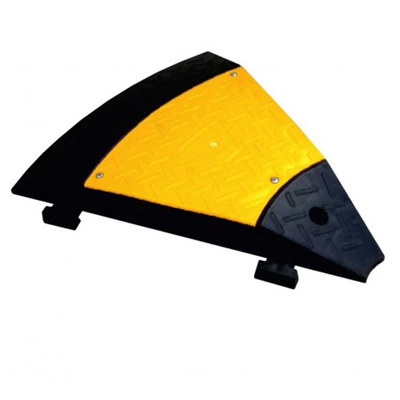
- Rigid channel – for straight routes, intense traffic
- Protections with removable cap – for quick access to cables
- Corrugated tubes — for multiple or large cables
After medium use
- Interior – offices, homes, servers
- Outside – lighting cables, telecommunications, industrial cables
- Industry – resistance to chemicals, high temperatures and heavy traffic
Relevant differences between options
- Flexibility vs rigidity – choice depends on the cable path and exposure environment
- Material – PVC for low cost and general uses, polyurethane for high durability
- Accessibility – protections with detachable cover allow quick changes, fixed tubes are more stable
How to choose correctly
- Identify the type of cable – electrical, data or telecommunications
- Sets the operating environment – interior, exterior, industrial
- Determine route – lengths, curves, traffic zones
- Choose Material – sustainability and flexibility are critical
- Consider accessibility – if you add or modify cables frequently
Common errors
- Choosing too small a diameter, the cables don't fit properly
- Insufficient environmental resistant material (UV, moisture, chemicals)
- Surface or incomplete assembly, cables remain exposed
- Wiring of cables due to lack of internal organisation
- Use of flexible tubes in areas with intense traffic
Professional recommendations
- Use Flexible tubes or channels for multiple-curved tracks
- In industrial spaces, choose to Impact-resistant materials and chemicals
- For offices and houses, use aesthetic channels and easy to access
- Visibly marches routes in areas exposed for increased safety
Maintenance and good practice
- Periodically check material integrity
- Clean dust and dirt that can accumulate in tubes
- Replace damaged sections immediately
- Organizes cables by color coding or quick access labels
Frequently asked questions
-
"Can I protect external cables with flexible tubes?
Yes, but choose UV-resistant materials and water.
-
"Can they be mounted over the floor?
Yes, with flat tubes or special channels for pedestrian traffic.
-
"What dimension do I have to choose?
The diameter shall allow for the passage of cables without strangulation and provide space for subsequent changes.
-
"How durable are they?
Quality materials can last for years, even in industrial conditions.
Conclusion
Cable protections are essential elements for the safety, organisation and sustainability of electrical and data installations. The right choice depends on the environment, the type of cables and the level of traffic, and the right implementation reduces the risk of damage and incidents, providing an orderly and secure space.
These solutions are essential both in the dwellings, and in offices, industrial spaces or external areas, guaranteeing long-term protection and easy access to cables.