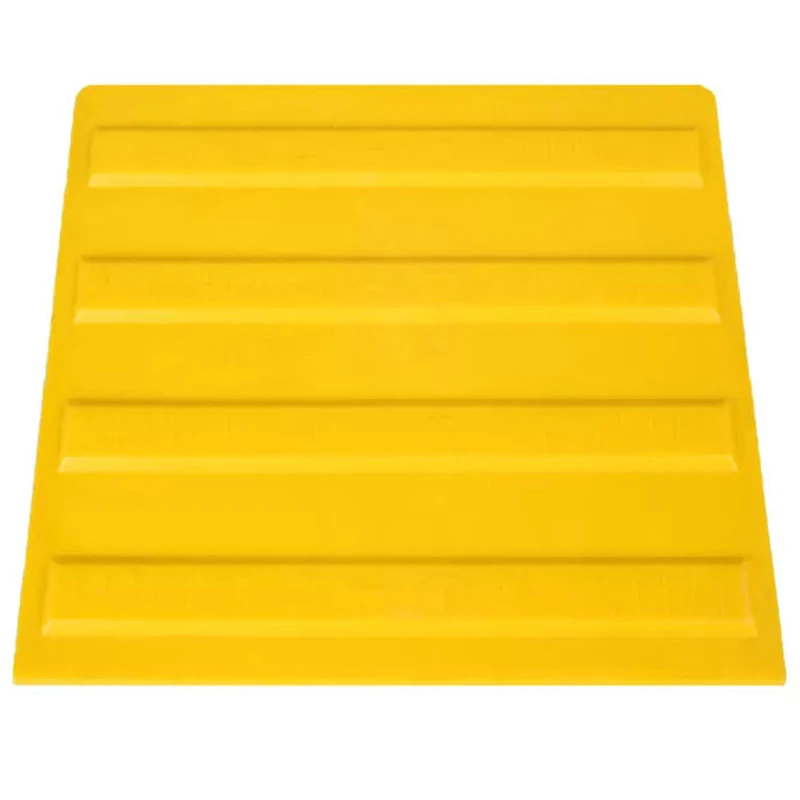
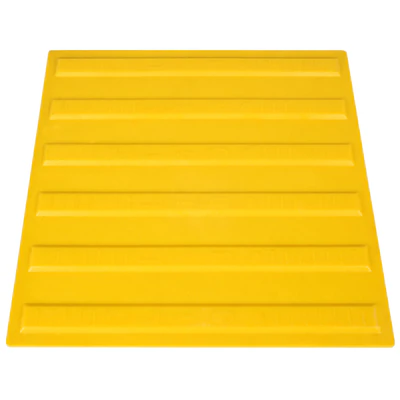
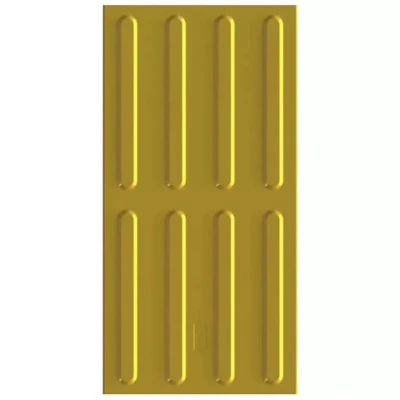
Touch mark for visually impaired people 300x300 mm is one of the most efficient modern solutions for targeting people with vision impairments in urban, commercial and institutional spaces. Designed to transmit information through touch contact and visual contrast, this type of directional or warning tactile paving becomes a mandatory standard in accessible infrastructure.
In a context in which accessibility is no longer optional but a legal and moral requirement, this product completely transforms the travel experience to safety.
Why is a touch marking 300x300 mm essential
In large European cities, the infrastructure is designed for all users. Touch markings for visually impaired people are not just elements of urban design – they are vital tools.
Plates and plates 300x300 mm provides an ideal balance between:
- optimal contact surface
- quick modular installation
- increased visibility
These are used for:
- directional guidance
- warning before danger
- Space delimitation
How Touch Marks Work for Visually Impaired People
Intelligent touch system based on perception
The surface shall be designed with:
- longitudinal ribs – for guidance
- Bumbi (domestic) – for warning
These forms are instantly recognised by:
Strong Visual Contrast
In addition to the tactile role, the contrasting color (yellow, white, grey) helps people with poor vision quickly identify the paths.
Technical characteristics – touch marking 300x300 mm
Dimensions and specifications
- Standard size: 300 x 300 mm
- Thickness: adapted to traffic (usually 3–7 mm or more for outdoor use)
- Optimised weights for mounting
Material available
- Polyurethane (PU) – flexible and resistant
- PVC – economic and easy to install
- Stainless steel – maximum durability
- Aluminium – resistance + reduced weight
- Industrial rubber – excellent antislip
Key Properties
- Heavy traffic resistance
- Certified anti-slip
- UV resistance and weather
- Compatible inside/outside
- Excellent adhesion (self-adhesive or mechanical fixation)
Where to use tactile markings 300x300 mm
Public spaces
- walk
- pedestrian crossings
- Transport stations
Commercial buildings
- shopping malls
- supermarkets
- office buildings
Institutions
- hospitals
- schools
- city planning
Transport and infrastructure
Touch markings 300x300 mm
Directional markings
Indicates the path to follow. They're made of parallel nerves.
Warning markings
Signs danger:
- margin of the peron
- the beginning of the stairs
- intersections
Fast and efficient installation
Installation methods
- self-adhesive (rapid, no tools)
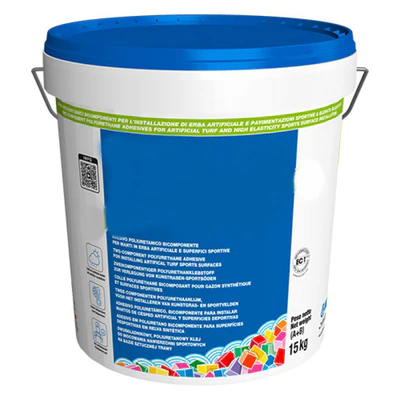
- Professional adhesive
- Dilutions/screws (for the outside)
Compatible surfaces
- concrete
- Fat
- granite
- asphalt
- metal
Mounting Advantage
- reduced installation time
- Minimum costs
- without major intervention
Compliance and standards
The tactile markings 300x300 mm conform to:
- European accessibility standards
- rules for pedestal safety
- requirements for persons with disabilities
They shall be binding in:
- public projects
- new constructions
- urban modernizations
Commercial benefits for the customer
- Increasing accessibility of space
- Avoid legal sanctions
- Improve user experience
- Demonstrate social responsibility
- Reduce the risk of accidents
- Increase the value of the project
- Rapid and efficient implementation
- Adaptability in any environment
- Optimum long-term cost
Competitive advantage in modern projects
Clients and institutions are increasingly choosing solutions that:
- comply with international standards
- provides sustainability
- are easy to maintain
The tactile markings 300x300 mm are:
- modulation
- scalable
- compatible with any project
Maintenance and sustainability
The product is designed for intensive use:
- resists high pedestrian traffic
- Do not lose your touch properties
- does not discolor quickly
Minimum maintenance:
- regular cleaning
- check fix
FAQ – Frequently Asked Questions
What role do tactile markings play for visually odded people?
It helps to orient and warn people with impaired vision in public spaces.
Where do the 300x300 mm tactile markings stand?
On the sidewalk, in buildings, on towers, in risk zones or guided routes.
Are they legally binding?
Yes, many public and commercial projects are required by accessibility rules.
What's the best material?
Depends on the application: stainless steel for intense exterior, polyurethane for interior.
Can they mount on any surface?
Yes, with the right method (adhesive or mechanical).
How long is the assembly?
From a few minutes per plate, depending on the surface.
Are they weather resistant?
Yes, the outdoor variants are treated UV and water resistant.