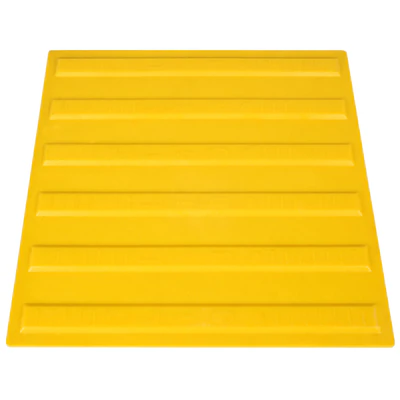
Tactile marking for visually impaired people STOP
27,01 lei
In stock
in6 variant
Request a quote – Tactile marking for visually impaired people STOP See options – Tactile marking for visually impaired people STOPWe use strictly necessary cookies to run the site and, only with your consent, to remember viewed products, for visit statistics and for YouTube video playback. You can change your mind at any time from “Cookie settings” at the bottom of the page. Cookie policy
Technical advice: 021 450 60 70 · Fast delivery nationwide · Blog
Touch markings are special elements mounted on the floor to guide and warn people with impaired vision.
27,01 lei
In stock
in6 variant
Request a quote – Tactile marking for visually impaired people STOP See options – Tactile marking for visually impaired people STOP20,00 lei
In stock at supplier
sup6 variant
Request a quote – Touch mark for visually impaired people 300x300 mm See options – Touch mark for visually impaired people 300x300 mm64,00 lei
In stock
in6 variant
Request a quote – Touch mark for visually impaired people STOP 300x600 mm See options – Touch mark for visually impaired people STOP 300x600 mmWe didn't find any products for the chosen filters.
Products in this category cover dimensions between 300 mm and 600 mm. Check the size, material and compatibility with your application in each product file.
In addition, for orders and questions, the Blockator.ro team offers delivery throughout the country and technical advice.
Touch markings is a floor-mounted guidance system designed to help people with vision impairments move safely. They shall transmit information through: Texture and reliefbeing detectable with the white stick or by direct contact with the foot sole.
If you have ever stepped on an area with striations or raised points at a station, at an airport or in front of a pedestrian crossing, you have already met this type of tactile guide.
Their role is not decorative. I'm part of a system of accessibility and inclusion, essential in a modern society that respects everyone's right to safe mobility.
The system works by clear differences in texture from standard flooring. The person shall identify the change of relief:
There are two main types of information transmitted:
These two types are not interchangeable and must be installed correctly, in accordance with the technical rules.
The common question is: "Are tactful markings mandatory in private buildings?
In many situations, yes – especially in publicly accessible areas, in accordance with the accessibility rules in force.
Prevent accidents in areas such as:
I allow independent travel without constantly relying on external help.
Public buildings must comply with accessibility standards for people with disabilities.
Their installation conveys a clear message: space is designed for everyone.
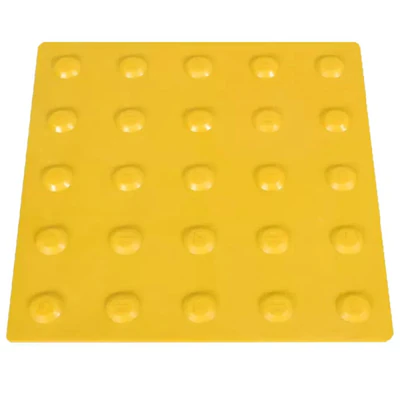
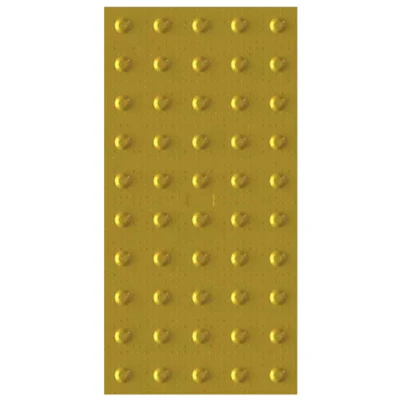
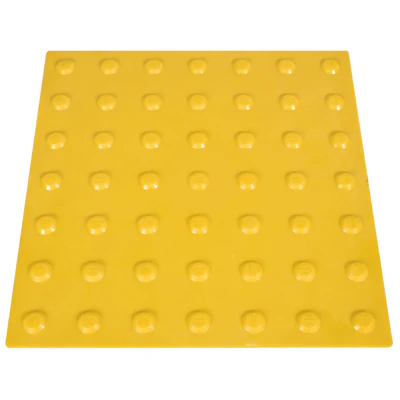
They have the shape of regularly arranged relief points. They are used for:
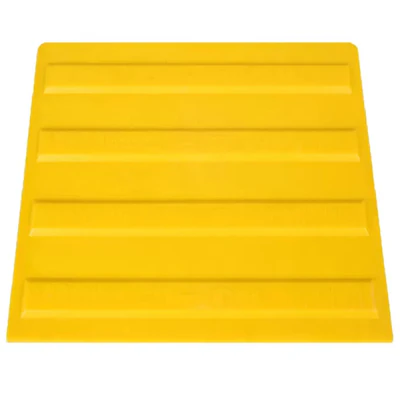
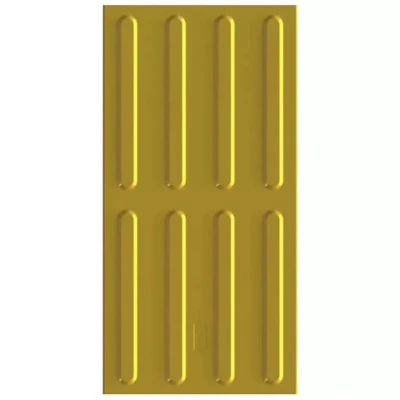
They have longitudinal striations. Indicates direction of movement.
They are used for:
The choice of material directly influences sustainability and long-term cost.
The exterior shall require:
Areas such as rails require metal or industrial solutions.
Offices can use aesthetic, discreet variants.
Is it inside or outside?
Is this the area with high traffic?
There are technical rules concerning:
Durability should be correlated with the intensity of use.
A poorly located system can create confusion.
The guidance shall be consistent and continuous.
These errors can completely compromise the efficiency of the system.
Yes, accessibility legislation requires their implementation in most public buildings.
Plates are prefabricated panels, and buttons are individual elements mounted on time.
Yes, the applied variants allow direct mounting on existing surfaces.
Metal or industrial polymer models can last for years under extreme conditions.
Touch markings they are not just a technical detail, but an essential component of an accessible space. They offer safety, autonomy and inclusion, contributing to compliance with legal rules and the creation of a responsible environment.
The right choice involves analysis, planning and use of appropriate materials. When properly designed and assembled, these systems become invisible to most, but indispensable to those who need them daily.
Get our offers and news once a month. You can unsubscribe at any time.