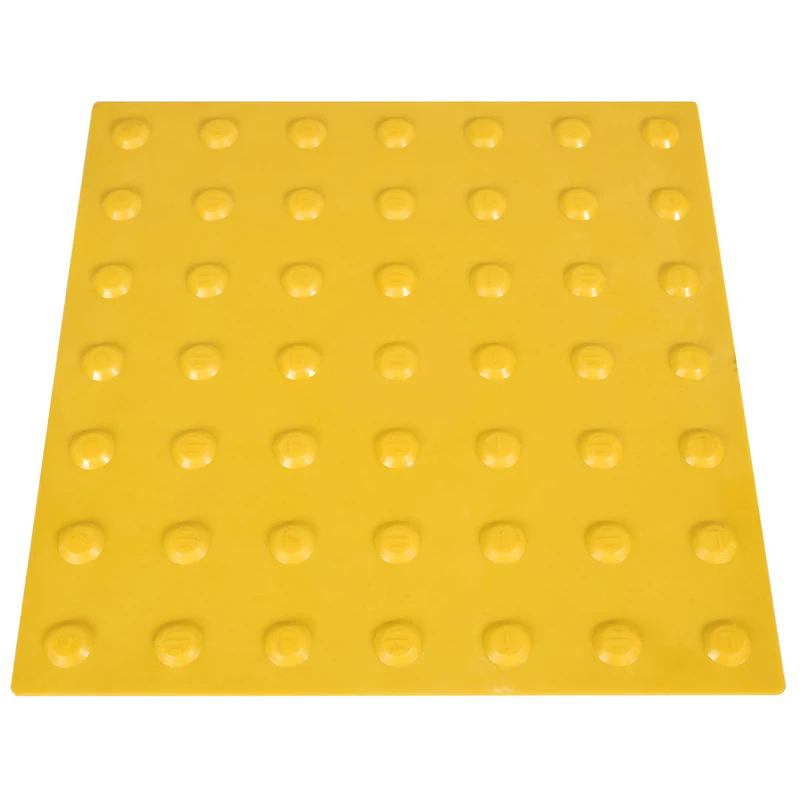
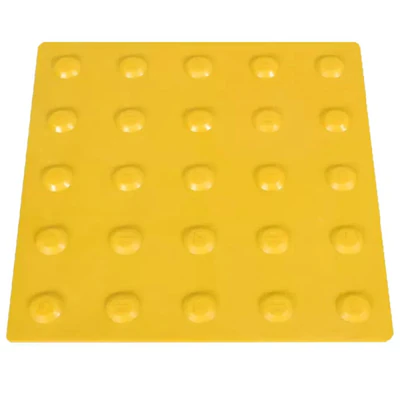
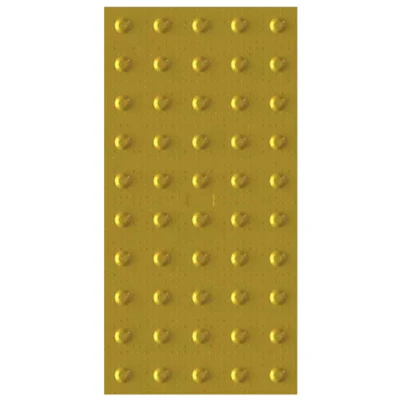
In a properly constructed environment, accessibility is not optional — it is an obligation. Touch mark for visually odded people STOP is an essential element in guiding people with impaired vision, providing clear warning before dangerous areas: stairs, pedestrian crossings, intersections or level changes.
This type of STOP tactile warning marking is designed in accordance with international accessibility rules and is used in public spaces, commercial buildings, institutions and urban infrastructure on a standard basis. With a distinct design and a specific texture (usually with cone trunks or domes), the product transmits a universal message: stop and evaluate the environment.
What the STOP touch mark is and how it works
The STOP touch marking is a special surface, mounted at the floor level, which can be detected with the white stick or by direct contact with the foot.
Main role of tactile warning marking
- Signal imminent hazards
- Indicates where to stop
- Increases autonomy of the blind
- Reduces the risk of accidents in public spaces
How it is perceived by users
The surface is composed of prominent reliefs (bombs or cone trunks) which create a distinct sensation compared to the rest of the flooring. This difference shall be immediately recognised and interpreted as a warning signal.
Essential technical characteristics of the tactile marking for visually impaired people STOP
Durable and durable materials
The markings are made of professional materials, adapted to the intensive use:
- Industrial PVC
- Polyurethane (PU)
- Stainless steel
- Aluminium anodised
These materials offer:
- Heavy traffic resistance
- durability in time
- UV resistance and weather
Dimensions and configuration
STOP markings are available in different formats:
- Modular plates (e.g.: 300x300 mm, 400x400 mm)
- tactile bands
- configurable systems according to the project
Adherence and safety
- Certified anti-slip surface
- Inner and external compatibility
- High friction coefficient
Simple and efficient assembly
- Self-adhesive (for indoors)
- Mechanical fixing (screws/dilutions)
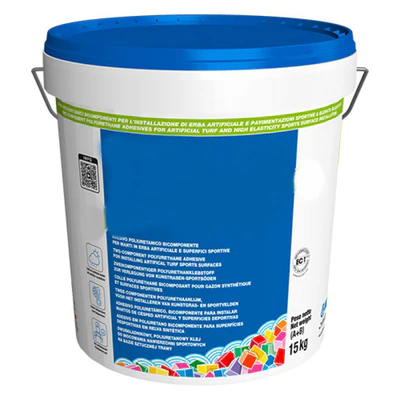
- Professional external adhesives
Where the STOP touch mark is used
Warning tactile markings are essential in any space where there are level changes or areas at risk.
Public spaces
- crossings and intersections
- Public transport stations
- pedestrian crossings
Commercial buildings
- shopping malls
- supermarkets
- office buildings
Institutions and infrastructure
- hospitals
- Schools and universities
- public institutions
- airports and airports
Critical areas where it is mounted
- before the stairs
- at the edge of the column
- before pedestrian crossings
- to changes in direction
Standards and compliance
The tactile marking for visually impaired people STOP is made according to international and European standards:
- ISO 23599 – touch systems for visually odded people
- EN 17210 – accessibility in the built environment
- Local rules on accessibility for people with disabilities
These standards shall ensure:
- correct dimensions of the relief
- appropriate visual contrast
- optimal position
Advantages of using STOP tagging
Increased safety
Reduce the risk of accidents in dangerous areas.
Legal compliance
It complies with the legislative requirements on accessibility.
High durability
It lasts for years without significant degradation.
Aesthetic integration
Available in contrasting colours (yellow, grey, black).
Quick installation
They can be mounted without complex interventions.
Commercial benefits for customers
- Increase the safety level of your space
- Avoid legal sanctions on accessibility
- Provide an inclusive experience to all users
- Improve the image of the company
- Reduce the costs of accidents
- Invest in a long-term solution
- Ensure compliance with European standards
Difference between STOP marking and directional marking
It is important not to be confused:
Mark STOP
- warning role
- relief type bamboo
- stop signal
Directional marking
- guidance role
- linear relief
- indicate direction of movement
How to choose the correct STOP tagging
Depending on location
- Interior: self-adhesive, PVC
- Exterior: metal or PU resistant
Depending on traffic
- reduced traffic: standard variant
- intense traffic: premium material
Depending on the design
- strong contrast for visibility
- integration with space design
Maintenance and sustainability
The STOP touch markings shall require minimum maintenance:
- regular cleaning with standard solutions
- verification of fixing in areas with intensive traffic
- wear resistance and external factors
Life span may exceed 5–10 years, depending on material and use.
Frequently Asked Questions (FAQ)
What is the STOP touch mark?
It is a warning system for visually impaired people, which signals dangerous areas where stopping is necessary.
Where do the STOP touch tags stand?
Before stairs, pedestrian crossings, peron, intersections or any area at risk.
Are they legally binding?
Yes, in many cases they are required by accessibility rules for public and commercial spaces.
What materials are the most resistant?
Stainless steel and polyurethane are the most durable for outdoors.
Can they mount on any surface?
Yes, on concrete, gravel, asphalt or metal, with suitable fixing solutions.
What is the difference between STOP marking and guidance?
STOP warns, guidance directs.
How long is the assembly?
From a few minutes (self-adhesive) to a few hours (mechanical fixing).