Traffic mirrors
Do you need help choosing?
Tell us what you need and we'll send you the offer on the same working day.
See and
Road mirrors: Safety, Visibility and Control in Traffic
In a world where road safety becomes an absolute priority, Road mirrors essential solutions for reducing accidents and improving visibility in intersections, parking lots, industrial areas and private premises are required. This detailed article gives you everything you need to know about road mirrors: types, applications, materials, advantages, choice criteria and tips for mounting and maintenance.
What are road mirrors?
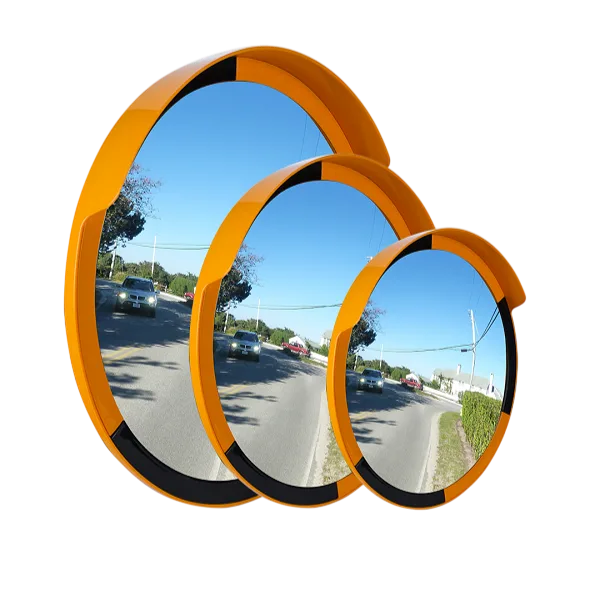
Road mirrors Passive signalling equipment used to increase the visual field of drivers or pedestrians in areas with reduced visibility. They allow the observation of traffic from dead angles and help to prevent collisions.
Types of road mirrors
1. Convex road mirrors
- The most common guy.
- It offers a wide field of vision.
- They are ideal for intersections, exits from side roads or from the courtyards.
2. Industrial road safety mirrors
- Used in factories, warehouses and underground parking.
- Helps to avoid accidents between machines, stackers and personnel.
3. Parking mirrors
- Mounted in corners or near ramps.
- They increase visibility in narrow spaces or with dead angles.
4. Anti-ringin / anti-scarring mirrors
- Specially weather resistant cover.
- Recommended in areas exposed to vandalism or extreme conditions.
5. Heated mirrors
- Predicted with electrical resistance to prevent abortion or freezing.
Where are the street mirrors used?
✔Dangerous intersections
The mirrors allow drivers to see vehicles approaching from opposite directions, especially at intersections in the form of ‘T' or ‘Y'.
✔Outflows from courtyards or garages
Strategicly located mirrors help drivers check the presence of pedestrians or other cars before entering the road.
✔Public and private parking
Improve orientation and prevent collisions in areas with reduced maneuvering space.
✔Industrial and Logistic Areas
It shall contribute to the protection of personnel and equipment by clearly viewing the corners and intersections.
✔Commercial spaces and institutions
Mirrors are used including for surveillance and theft prevention.
Materials used in the manufacture of road mirrors
Acril (PMMA)
- Easy and impact-resistant.
- It offers clear reflection.
- Resistant to UV rays.
Polycarbonate
- Extremely resistant to shocks and vandalism.
- According to the intensive public areas circulated.
Stainless steel
- Excellent resistance in time.
- Ideal for aggressive environments: salt, industrial areas, ports.
Secured glass
- Top quality of the image.
- Less used due to relative fragility.
Advantages of using road mirrors
- Prevention of road and industrial accidents
- Increased visibility in areas with dead angles
- Improving traffic flows at intersections
- Reduced costs compared to other safety systems
- Easy to install and maintain
- Available in different sizes and shapes (round, rectangular, oval)
How do you choose a suitable road mirror?
Factors to be considered:
-
Installation area – road traffic, pedestrian, industrial?
-
Desired visibility – wide angle, long distance?
-
Type of mirror – convex, warm, anti-scattering?
-
Size — depending on the observation distance (40–90 cm)
-
Material – acrylic, polycarbonate, stainless steel?
-
Assembly – on the post, wall, fences or ceiling?
Tips for installation and maintenance
- Install the mirror at the correct height for maximum visibility.
- Ensures gripping with adjustable support of galvanized or stainless steel.
- Regularly clean the surface of the mirror with special solutions.
- Avoid covering the mirror with vegetation or snow.
- Regularly check stability and alignment.
Frequently Asked Questions about Road Mirrors (FAQ)
What angle of visibility does a convex mirror offer?
Answer: Between 90 and 160, depending on the curve and size.
Can I install a road mirror on my own?
Answer: Yes, if you have basic tools and mounting support included. For public areas, installation by a specialist is recommended.
Is the street mirror mandatory by law?
Answer: It's not mandatory, but it's recommended in areas with reduced visibility or history of accidents.
What lifespan does a road mirror have?
Answer: Between 5 and 10 years, depending on the material and environmental conditions.
What size of mirror is suitable for an intersection?
Answer: Usually between 60 cm and 90 cm, depending on the distance to the vehicles to be viewed.
Road mirrors for dangerous intersections
60 cm convex road mirror
mirrors road traffic quick mounting
safety mirrors for storage
industrial mirrors anti-abortion
resistant polycarbonate road mirror
Conclusion
Road mirrors is a practical and efficient solution for increasing visibility and safety in traffic, industry and commercial spaces. Choosing the right mirror, correct assembly and periodic maintenance can prevent accidents and contribute to a safer road environment. Invest safely – it is the most important choice you can make for yourself, your employees or your family.